
Futhark Runes and How To Use Them

Updated: Apr 2
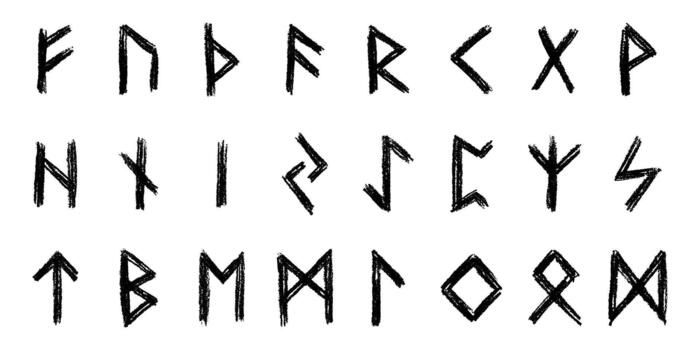
The runes were most likely thought to be a gift from the gods used to gain their wisdom. For centuries, ancient Nordic and Germanic peoples used runes to seek wisdom, understand their lives, and connect with the spiritual world. They were used in rituals, such as invoking good harvests and for holidays. Some runes even influenced modern English letters. The Elder Futhark, the earliest known runic alphabet, was used from roughly the 2nd to 8th centuries CE and consists of 24 symbols grouped into three “aettir.” Named after its first six characters (Fehu "ᚠ", Uruz "ᚢ", Thurisaz "ᚦ", Ansuz "ᚨ", Raido "ᚱ", and Kauno "ᚲ"), each rune has a name based around a concept or force of nature that emphasizes the rune's phonetic value. Compared to more complex systems, its smaller set of symbols makes it much more approachable than 78 tarot cards. Let’s begin with a little bit of history on where the runes come from before we get to the fun part of actually using them.
Runic History
The runes themselves belong to a broader runic writing system that emerged relatively late compared to other European scripts and were influenced by earlier scripts, such as the Etruscan and Latin alphabets, then adapted by Germanic groups for their own languages. Even today the similarity between certain runes and certain letters is easy to notice. Unlike modern writing systems, the Elder Futhark was not typically used for long texts due to limitations of literacy and writing capability. Instead, runic monuments mostly have short inscriptions carved into them. Some even have scenes from poetic epics. Objects like jewelry, tools, weapons, and stones were reserved for wealthy families who could pay their artisans extra. These inscriptions often recorded names, ownership, brief messages, or even scenes from epic poetry reflecting more common but still limited literacy. Inscriptions sometimes included repeated or seemingly nonsensical sequences of characters, which scholars interpret as magical formulas or charms.
Runes carry deeply symbolic and ritual significance. This dual role—as both a writing system and a medium for ritual expression—is a key feature of the Elder Futhark usage. The Danish National Museum notes that runes were often associated with magic, used in amulets or inscriptions intended to influence fate, provide protection, or commemorate the dead. Bindrunes-or runes that are a combination of two or more runes-are incredible tools for getting comfortable making sigils too. We'll talk more about each of those in separate posts later.
How to Prepare and Cast a Rune Reading
Before you throw or "cast" your runes, it's important to prepare your space. You can have your space however you wish; your reading will be just as personal. Having a properly cleansed and set area for your cast can help you learn if you're still a beginner. Remember that the Hollywood level of detail from readings doesn't happen in real life. The runes are NOT a tool to use to unravel the mysteries of the universe or give extensive detail on predicting the future.
There are no formal rules to performing a reading, but these tips may help you get comfortable with your runes quicker.
Find a quiet space free from distractions. Set up a small area as you would for casting dice and place an altar cloth down to define your casting area. Runes that fall outside of the cast area are to be removed from your cast. You may want to cleanse your runes beforehand by passing them through incense smoke or placing them in moonlight.
Take a few deep breaths until you feel yourself settle into a relaxed state. Keep breathing as if to meditate. When you feel "ready" or as if the part of you that inhabits your body stills, you may draw a single rune or small handful of them. 3-5 runestones per cast is plenty. However many runes seem appropriate when you first reach into your rune bag.
Hold your runes close to you and ask them a question. Simpler queries are better for starting out. More complicated questions could require an equally complicated amount of runes. Runes work best when using present tense terms raised as an issue. A good example would be asking the runes your questions the way you ask someone you trust about serious matters. Toss your runes onto your prepared casting surface from about 6-8 inches above it.
When your runes are cast consider the angle of the runes. Reversed or upside-down/backwards runes mean the opposite of what their typical meaning states. Converse runes (or runes that land face-down with the rune hidden) mean that the rune associated has an unconscious or secret manifestation. Some runes look the same right side up or upside down, so not every rune will have a reversed meaning. If there is no indication that a rune has a reversed interpretation it will be noted in the next section.
Don't focus on how literally the interpretation of the rune shows up. These are symbols that speak in metaphor. What does the meaning of the rune you pulled have to do with what you've asked? How could something related to this rune manifest in a modern way? Did any runes touch? Think of what the meaning of the rune reminds you of instead of what the meaning of the rune actually is.
Look at the individual meanings of each rune. Consider the position of the runes relative to each other, and yourself. Runes closer to you should be considered more relevant. Combine the symbol meanings to form a narrative or answer. How accurate does your answer feel? The runes can't give you a fully spelled out answer, but with practice one can get pretty close to that level of surety.
The Runes and Their Meanings
Finally the fun part! Below you'll find a list of the runes in order and any alternate spellings or pronunciations of their names. Say whichever form is most comfortable to you and use whichever spelling of the runes you prefer if using the runes to write your book of shadows.
ᚠ
Fehu: the Rune of Wealth and Fullfillment
Alternate Names and Spellings: Feoh; Fe; Fa
Pronunciation: Fay-who
English Letter Equivalent: F as in 'fat'
Literal Translation: cattle; money, wealth
Meaning: reward; wealth; nourishment
Fehu talks about material possessions and anything related to what luxurious fantasies usually come to mind when you think about the concept of wealth. Use this rune to reflect on any work or school related bonuses. The physical effort required to succeed in life also falls under Fehu's interpretations. What awards or other ceremonies could this rune be talking about? Remember to be unselfish and generous with your physical and financial blessings just as much as your emotional, mental, and spiritual ones. When reversed, Fehu talks about greed, materialism, or selfishness. It hoards rather than gives. Conversely, Fehu warns against hiding these blessings, or that they could be being purposefully kept from you.
ᚢ
Uruz: The Rune of Strength
Alternate Names and Spellings: Ur; Urus; Uraz
Pronunciation: Oor-ooze
English Letter Equivalent: short U as in 'under' or OO as in 'choose'
Literal Translation: aurochs/ox
Meaning: physical or mental strength; health; male virility and manhood or fertility, femininity, and womanhood
Uruz is the second rune of the Elder Futhark. Its name is associated with the aurochs, a now-extinct species of wild cattle, and it symbolizes raw physical strength, vitality, endurance, and untamed natural power. Uruz is often interpreted as representing both physical health and inner resilience. Uruz also governs the jurisdiction of either trials by fire for character growth or simply as the challenges life throws along the way. Use your talents not to show off, but to uplift. In reverse this rune calls out cowardice or mistakes, especially ones made purposefully. Conversely Uruz points to hidden strength, performative generosity, or even the best disguised scams and lies.
ᚦ
Thurisaz: The Rune of Chaos, Evil, and Temptation
Alternate Names and Spellings: Thorn; Thurs
Pronunciation: Thoor-ee-sawz
English Letter Equivalent: TH as in 'thin' or 'weather'
Literal Translation: giant; monster; a thorn; devil; the god Thor or his hammer Mjollnir
Meaning: magical power; the force of chaos or evil; temptation; a warning
Often linked to both destruction and protection and symbolizing raw energy whether defensive or destructive, Loki's rune is perhaps one of the easiest to recognize. Thurisaz is also commonly connected with the hammer of Thor, embodying the idea of force applied with purpose to ward off threats. Both malice directed towards and by the reader will be spoken about by Thurisaz. Think of any conflicts lately and try to examine any actions as if they were those of a stranger's. Be wary of curses for persistent runs of bad luck. In reverse (with the "thorn" pointing towards the left) Thurisaz represents an overcoming of chaos just as much as it could mean a return of your own spells towards you. Conversely the runic omen of "weird shit" is a strong warning against something because it will NOT be good.
ᚨ
Ansuz: Odin's Rune, aka The Messenger Rune
Alternate Names and Spellings: As/s; Os/s; Ansur
Pronunciation: Awn-sooze
English Letter Equivalent: A as in 'hat' or long A as in 'harm' or 'lawn'
Literal Translation: a god; a leader; Odin (or Loki when reversed)
Meaning: knowledge; wisdom; communication; a message or omen
Ansuz represents inspiration, insight, and the transmission of messages—whether spoken, written, or intuitive. Associated with Odin, Ansuz is a good indicator of truthfulness and clearly communicated goals/boundaries/wishes/presentations/etc. It can symbolize guidance from higher sources, or the importance of listening as well as speaking. Pay extra close attention to other runes in this reading! Reversed, Ansuz often points to lies and unwise actions, perhaps even incompetent leadership. Conversely Odin's rune is a highlighter of lacking awareness, secrets, manipulation, and sabotage.
ᚱ
Raido: The Traveler's Rune
Alternate Names and Spellings: Rad; Reidh; Raidho
Pronunciation: Rye-doh
English Letter Equivalent: R as in 'red'
Literal Translation: riding; a journey
Meaning: a journey; arrival; departure; union or reunion; events concerning travel or vehicles
This rune's name translates to "journey" associating Raido with all forms of travel and vehicles. Raido often represents the idea of being on the right path, guided movement, or the unfolding of events in a natural order. It can also reflect the importance of alignment between one’s actions and inner values. In interpretation, Raido may suggest a journey ahead, a need for purposeful direction, or the process of navigating change with the future in mind. Don't try to control the cyclic nature of the wheels of fate and fortune. Not everything is meant for everyone. In reverse Raido wants movement during stagnation or even to call off a road trip. Converse Raido speaks to fake friends, failures of launch, rigidity, and "high reward no effort" mindsets.
ᚲ
Kauno: The Rune of Fire, aka The Torch of Enlightenment
Alternate Names and Spellings: Ken; Kenaz; Kano
Pronunciation: Cow-noh
English Letter Equivalent: hard C as in 'cat' or K as in 'king'
Literal Translation: a firebrand or torch; an ulcer, wound, or opening
Meaning: heat; light; enlightenment; health problem/s
Often interpreted as “torch,” Kauno represents learning, craftsmanship, and the spark of inspiration that drives creativity and understanding. Other translations also point to "opening" as if to be wounded signifying transformation through awareness, as light brings clarity and enables change in painful or uncomfortable fashion. In interpretation, this rune often points to breakthroughs, renewed vision, or the uncovering of truths that guide growth and innovation. Reversed Kauno shows that spite or impulsive decisions aren't always good ideas. You could be going down a path that's bad for you or even undoing years of self improvement. Its interpretations as a wound of some sort indicate a potential health collapse when converse.
ᚷ
Gebo: The Rune of a Gift, Love, and Forgiveness
Alternate Names and Spellings: Gyfu; Gebu
Pronunciation: Ghay-bo
English Letter Equivalent: G as in 'good' or GH like the 'ch' sound in 'loch'
Literal Translation: gift
Meaning: a gift or generosity; relationships; forgiveness; a talent, skill, or ability
Gebo is the rune of gifts, exchange, and the balance of relationships. It translates to “gift,” reflecting the idea of reciprocity—giving and receiving in a way that maintains harmony and mutual respect. Physical gifts, partnerships, generosity, bonds formed through shared effort or trust, talents, skills, abilities, or quirks all fall under Gebo. It also carries a deeper meaning of sacrifice and balance, suggesting that true connection requires equal contribution from both sides. Now is a good time for forgiveness, or at least forgiveness isn't impossible. When converse you have a gift or talent you aren't using, someone's "useless" gift or trinket may not actually be useless, and romance or "cool stuff" isn't what you need right now. Gebo has no reverse.
ᚹ
Wunjo: The Rune of Joy
Alternate Names and Spellings: Wyn/n; Wungo
Pronunciation: Vun-yoh
English Letter Equivalent: W as in 'wax' or V as in 'van'
Literal Translation: joy
Meaning: happiness; light; inner peace; success
Translated as “joy” or “bliss,” Wunjo reflects emotional well-being, contentment, and the satisfaction that comes from things falling into place. Wunjo symbolizes alignment within oneself and with others, suggesting a state of peace, shared happiness, and positive relationships. It can also represent success achieved through balance and cooperation. This all encompassing rune of happiness, resolution after difficulty, and supportive energy that brings a sense of unity and delight reminds us that little things are the real reason for happiness. Share joy and spread positivity wherever you can. In reverse Wunjo indicates deeply rooted sadness or anger. Please reach out to a mental health counselor or trusted individual if this seems to define your day-to-day life. Conversely Wunjo wants you to slow down and take a deep breath. The effort you put in is not erased just because seemingly nothing comes from it.
ᚺ
Hagalaz: The Rune of Disruption
Alternate Names and Spellings: Hagal; Haegl; Haglaz
Pronunciation: Har-ghawl-arz
English Letter Equivalent: H as in 'hat'
Literal Translation: hail
Meaning: weather; damaging natural forces; disruption; interference; transformation or change through distruction
Hagalaz is associated with disruption, transformation, and the forces of nature beyond human control. Its name means “hail,” symbolizing sudden, sometimes destructive events that can interrupt stability and bring about necessary change. Hagalaz represents the idea that upheaval, while difficult, clears the way for growth and renewal. It is closely tied to cycles of destruction and rebirth, emphasizing that transformation is a natural part of life. In interpretation, Hagalaz often points to unexpected challenges or disruptions, urging resilience and the understanding that even chaotic moments can have a silver lining. In converse anything that seems easy wont be, and that environmental factors have a risk to play. Hagalaz has no reverse.
ᚾ
Naudiz: The Rune of Necessity
Alternate Names and Spellings: Naudr; Nauthiz; Nyd
Pronunciation: Now-dthiz
English Letter Equivalent: N as in 'now'
Literal Translation: need; extremity
Meaning: need; want or desire; deprivation; endurance or patience; limitations or boundaries
Naudiz is associated with need, constraint, and endurance. Its name means “need” or “necessity,” symbolizing the challenges, delays, or pressures that test one’s patience and resilience. Naudiz represents the lessons learned through hardship, emphasizing the value of perseverance, self-discipline, and inner strength. It can also highlight the importance of caution and careful planning when faced with obstacles. In interpretation, Naudiz often points to situations that require endurance, thoughtful action, or acceptance of limitations, reminding one that adversity can foster growth and fortitude. In reverse (in this case, turned sideways), Naudiz rejecting or ignoring your own needs. If converse, you are hiding or down-playing your needs.
ᛁ
Isa: The Ice Rune
Alternate Names and Spellings: Is/s; Isaz
Pronunciation: Ee-saw
English Letter Equivalent: short I as in 'sit'
Literal Translation: ice
Meaning: ice; cold or freezing; stagnation or lack of change; lack of emotion; binding; bridge across danger; introspection; release
Isa is the eleventh rune of the Elder Futhark and is associated with ice, stillness, and pause. Its name literally means “ice,” symbolizing a time of suspension, reflection, or inertia, where movement and progress may be temporarily halted. Isa represents clarity through stillness, the preservation of energy, and the need for patience before action can resume. It can also reflect challenges that require calm endurance and self-control. In interpretation, Isa often points to a period of waiting, introspection, or restraint, reminding one that stillness can provide insight and prepare the way for future growth. If converse, delays are hidden, they could be bureaucratical, or they could be something you haven't considered or that don't seem to relate. Isa has no reverse.
ᛃ
Jera: The Rune of Success and Continuity
Alternate Names and Spellings: Ger; Ar; Jer; Yer
Pronunciation: Year-ah
English Letter Equivalent: J as in 'jam' or Y as in 'yap'
Literal Translation: year; harvest
Meaning: harvest; fertility; fruition; prosperity; cycles
Jera is associated with cycles, harvest, and the natural flow of time. Its name means “year” or “harvest,” symbolizing the rewards that come from patience, steady effort, and alignment with natural rhythms. Jera represents growth, fruition, and the results of hard work, emphasizing that success and abundance follow a period of preparation and persistence. It also reflects balance and the inevitability of change within life’s cycles. In interpretation, Jera often points to positive outcomes, the fruition of plans, or the need to trust in the natural progression of events. If converse, Jera speaks to a proportionate reward for effort, even if you feel you deserved more or someone is with-holding the true reward. It has no reverse.
ᛇ
Ihwaz: The Rune of Defense
Alternate Names and Spellings: Eihwaz; Eoh
Pronunciation: Eye-warz
English Letter Equivalent: Y as in 'yew' or long I as in 'side'
Literal Translation: yew tree
Meaning: weapon; defense or deflection; endurance; magic
Ihwaz is associated with endurance, protection, and the connection between the physical and spiritual realms. Its name is often linked to the yew tree, a symbol of strength, longevity, and resilience. Ihwaz represents inner stability, the ability to overcome obstacles, and the transformative power of perseverance. It also embodies the concept of spiritual growth through challenges and the safeguarding of one’s path. In interpretation, Ihwaz often points to resilience in the face of difficulty, the need for patience and determination, or guidance and protection during transformative journeys. When converse, it speaks to avoiding change or transformation. If things went back to how they were, would you be happy? Probably not. It has no reverse.
ᛈ
Perth: The Rune of Chance, Mystery, and Science
Alternate Names and Spellings: Pertho; Peorth
Pronunciation: Pair-dth
English Letter Equivalent: P as in 'pot'
Literal Translation: lost to time but thought to be the name of a cup for dice or the name of a game of chance using such a cup
Meaning: mystery; chance; a gamble; science; technology; illumination
Perth means mystery, chance, and the unknown. Its name is often linked to a gaming or dice cup, symbolizing fate, secrets, and the hidden forces that shape outcomes. Perth represents the cycles of life, the role of luck or destiny, and the uncovering of hidden knowledge through experience. It can also signify transformation that comes from unexpected events or insights. In interpretation, Perth often points to uncertainty, the need to trust in the process, or the potential for revelation and personal growth through unforeseen circumstances. When reverse, Perth is a warning not to be rash and to take no chances because failure is likely, or that something that appears straight-forward has a deeper meaning. Perth converse is a sign to not take anything for granted and only trust those closest to you or that there's hidden depths to a proposition.
ᛉ
Algiz: The Rune of Protection and Opportunity
Alternate Names and Spellings: Elhaz; Eolh
Pronunciation: Awl-gh-eeze
English Letter Equivalent: Z as in 'zone' or S as in 'cousin'
Literal Translation: elk sage; pinewoods
Meaning: oppurtunity for growth; rapid development; protection or safety
Algiz is associated with protection, defense, and spiritual guidance. Its shape resembles an upward-reaching elk’s antlers or a protective hand, symbolizing a shield against danger and a connection to higher forces. Algiz represents awareness, vigilance, and the safeguarding of oneself and others, as well as the support received from spiritual or ancestral guidance. In interpretation, Algiz often points to the need for caution, the presence of protective energies, or the importance of standing strong and maintaining boundaries in the face of challenges. When reversed, you may be open to attack or lack protection, there may be slow growth or even decline, or it's a warning to not be short-sighted or stubborn. Conversely, growth or development opportunities are disguised or a safeguard might not be as effective as hoped.
ᛋ or ᛊ
Sowilo: The Rune of Energy and Revelation
Alternate Names and Spellings: Sowelu; Sigel
Pronunciation: Soh-veal-oh
English Letter Equivalent: soft C as in 'nice' or S as in 'sit'
Literal Translation: the sun
Meaning: wholeness; light; energy; victory; disclosure; discovery
Sowilo is associated with the sun, success, and guidance. Its name means “sun,” symbolizing clarity, vitality, and the life-giving energy that illuminates the path forward. Sowilo represents triumph, personal power, and the achievement of goals, often signaling moments of enlightenment, inspiration, or victory. It also embodies the idea of alignment with one’s purpose and the illumination of truth. In interpretation, Sowilo often points to success, positive energy, and the clarity needed to overcome obstacles or move confidently toward one’s ambitions. When converse, the "eclipse" of light or energy, a misunderstanding or hidden information, concerns about health are unwarranted. There is no reverse.
ᛏ
Tiwaz: The Warrior's Rune
Alternate Names and Spellings: Tiw; Tyr
Pronunciation: Tee-wahz
English Letter Equivalent: T as in 'top'
Literal Translation: the god Tiw
Meaning: courage; compassion; justice; honor; a war or battle
Tiwaz is the seventeenth rune of the Elder Futhark and is associated with honor, justice, and leadership. Its name comes from Tyr, the god of law, courage, and sacrifice in Norse mythology. Tiwaz represents self-discipline, responsibility, and the courage to act in accordance with moral principles, often requiring personal sacrifice for the greater good. It also embodies the pursuit of fairness, order, and victory through integrity rather than force alone. In interpretation, Tiwaz often points to leadership, ethical action, and the need to uphold one’s values while striving for justice and achievement. Tiwaz in reverse speaks to naivete, shyness, or loss of concentration. It can be a sign to overcome cowardice or even a warning about someone left-handed. If it shows up converse, it tells of a hidden talent for leadership or that someone seen as foolish is actually quite courageous.
ᛒ
Berkanan: The Rune of Growth and Fertility
Alternate Names and Spellings: Beorc; Berkana/o
Pronunciation: Bear-khan-awn
English Letter Equivalent: B as in 'bag'
Literal Translation: birch-twig
Meaning: growth; fertility; rebirth; new life; physical beauty or stature
Berkanan is the eighteenth rune of the Elder Futhark and is associated with growth, fertility, and renewal. Its name means “birch,” a tree that symbolizes new beginnings, regeneration, and the nurturing aspects of life. Berkanan represents birth, family, and the cycles of life, emphasizing care, protection, and the gentle guidance needed for development and healing. It also reflects personal growth, creativity, and the cultivation of potential over time. In interpretation, Berkanan often points to new opportunities, nurturing relationships, or the start of a transformative phase that fosters growth, stability, and well-being. However when reversed, it means a lack of growth or loss of stature, a decline or loss of business/profits/crops, or a warning that it's not a good time for new ventures. Converse warns of a theft, that an increase in size or profit is being hidden or withheld, or a seemingly risky investment might actually be safe.
ᛖ
Ehwaz: The Rune of Momentum
Alternate Names and Spellings: Eh; Eoh
Pronunciation: Ay-wahz
English Letter Equivalent: E as in 'end' or'EE as in 'sheet'
Literal Translation: horse; steed
Meaning: momentum; speed; progression; change; relationships or partnerships
Ehwaz is the nineteenth rune of the Elder Futhark and is associated with movement, partnership, and progress. Its name means “horse,” symbolizing trust, cooperation, and the harmonious relationship between rider and steed. Ehwaz represents teamwork, loyalty, and the forward momentum that comes from working together toward a shared goal. It also signifies travel, transitions, and the smooth flow of change when guided by trust and collaboration. In interpretation, Ehwaz often points to partnership, progress through cooperation, or the positive results that arise from trust, communication, and coordinated effort. If this rune is reversed, it means lethargy, "moving backwards," muddled thinking, reluctance, or becoming lost. Ehwaz conversed is a sign that something that appears stagnant will suddenly start moving or that who appears willing or confident is up to no good.
ᛗ
Mannaz: The Rune of Humanity
Alternate Names and Spellings: Man/n; Madhr; Mannar
Pronunciation: Mah-nawz
English Letter Equivalent: M as in man
Literal Translation: mankind; human
Meaning: mankind or humanity; the self, inner being, or soul; manhood or womanhood
Mannaz is the twentieth rune of the Elder Futhark and is associated with humanity, community, and self-awareness. Its name means “man” or “human,” symbolizing both the individual and their connection to others. Mannaz represents intelligence, cooperation, and the balance between personal identity and social responsibility. It also emphasizes understanding oneself, one’s role in society, and the interdependence of human relationships. In interpretation, Mannaz often points to collaboration, self-reflection, or the importance of empathy and connection in achieving personal and collective growth. Reverse is the same, however it refers to someone of opposite gender identity. If converse, the person being refered to is being secretive or dishonest.
ᛚ
Laguz: The Water Rune
Alternate Names and Spellings: Lagu; Logr
Pronunciation: Lah-gooze
English Letter Equivalent: L as in 'let'
Literal Translation: water; lake; lagoon
Meaning: water; cleansing; intuition; emotional balance; creativity; fluidity
Laguz is the twenty-first rune of the Elder Futhark and is associated with water, intuition, and the flow of life. Its name means “water” or “lake,” symbolizing emotions, subconscious guidance, and the natural currents that shape experiences. Laguz represents adaptability, emotional intelligence, and the power of going with the flow while trusting instinct and inner wisdom. It also reflects renewal, healing, and the cyclical nature of life. In interpretation, Laguz often points to heightened intuition, the need to embrace change, or the guidance that comes from listening to one’s inner voice and emotional currents. Laguz reversed points to a danger of "sinking" or "drowning" in a "storm," "flood," or other destructive force of water. Converse is a warning about someone associated with water is trying to trick you.
ᛜ or ᛝ
Ingwaz: The Rune of Peace and Harmony
Alternate Names and Spellings: Ing; Inguz
Pronunciation: Ing-wahz
English Letter Equivalent: NG as in 'finger'
Literal Translation: an angel; the god Ing
Meaning: harmony; unity; love; peace; approval; completion or conclusion; success
Ingwaz is associated with fertility, potential, and inner growth. Its name is linked to Ing (Yngvi), a god connected to prosperity, peace, and the life force. Ingwaz represents the seeds of new beginnings, latent energy, and the preparation needed before action or creation can occur. It embodies harmony, personal development, and the quiet power of gestation—both literal and metaphorical. In interpretation, Ingwaz often points to the completion of a phase, the cultivation of potential, or the forthcoming emergence of growth, opportunity, and creative energy. If converse, Ingwaz means love, harmony, or peace might be hard to achieve, but persevere. It has no reverse.
ᛟ
Othila: The Rune of Family, Home, and Aquisition
Alternate Names and Spellings: Othala; Odal; Ethel
Pronunciation: Oh-thee-law
English Letter Equivalent: long O as in 'old' or short O as in 'lot'
Literal Translation: hereditary land; possession
Meaning: home; homeland or ancestral land; family; inheritance; possessions
Othila is associated with heritage, inheritance, and ancestral legacy. Its name means “ancestral property” or “homeland,” symbolizing family roots, cultural traditions, and the connection to one’s lineage. Othila represents stability, security, and the values passed down through generations, emphasizing the importance of preserving what is meaningful and sustaining community bonds. In interpretation, Othila often points to heritage, the influence of ancestry, or the need to honor one’s roots while building a foundation for future growth. The reverse speaks of immaturity, lack of forethought, a valueless inheritance, or a high cost to not taking a calculated risk. When converse, the honest or "just" way might be kept from you, or a "worthless" inheritance is full of unseen treasures.
ᛞ
Dagaz: The Rune of Transformation
Alternate Names and Spellings: Dag; Daeg; Dagur
Pronunciation: Daw-ghawz
English Letter Equivalent: D as in 'dog' or DJ as in 'Django' or DTH as in 'breadth'
Literal Translation: day
Meaning: day, daylight, or dawn; a breakthrough; radical change; beginnings; cycles
Dagaz is the twenty-fourth and final rune of the Elder Futhark, associated with daylight, awakening, and transformation. Its name means “day” or “dawn,” symbolizing clarity, new beginnings, and the breakthrough of light after darkness. Dagaz represents balance, hope, and the potential for profound change or enlightenment, often signaling a turning point or the resolution of a difficult period. It embodies the harmony between opposites—light and dark, conscious and unconscious—and the promise of growth through awareness. In interpretation, Dagaz often points to breakthroughs, personal transformation, or the arrival of clarity and opportunity after a time of uncertainty. If converse, you're looking at a "false dawn," the time is not right for change and it's yet to come, or you need to persevere and trust in yourself. Dagaz has no reverse.
Rune Spreads Similar to Tarot
While casting runes is popular, rune spreads offer a structured way to gain deeper insight. Spreads are patterns in which runes are placed, each position representing a different aspect of the question.
Common Rune Spreads
Three-Rune Spread: Past, Present, Future.
Five-Rune Spread: Situation, Challenge, Advice, Outcome, External Influences.
Nine-Rune Spread: A more complex layout for detailed readings.
Using spreads helps organize the reading and provides a clear framework for interpretation.
Tips for Accurate Rune Readings
Practice regularly to become familiar with the runes and their meanings.
Keep a journal of your readings to track patterns and insights.
Trust your intuition when interpreting the runes.
Avoid yes/no questions; instead, ask open-ended questions or make statements for richer answers.
Respect the runes as sacred tools and handle them with care.
Sources we used
We always encourage you to do your own research at Oracle's End. Here are the sources we used to write this info.
Discovering the Runes by Bob Oswald pgs. 18, 34, 36, & 68-161
Llewellyns's Complete Book of Correspondences by Sandra Kynes et. al. pgs.407-414

Comments